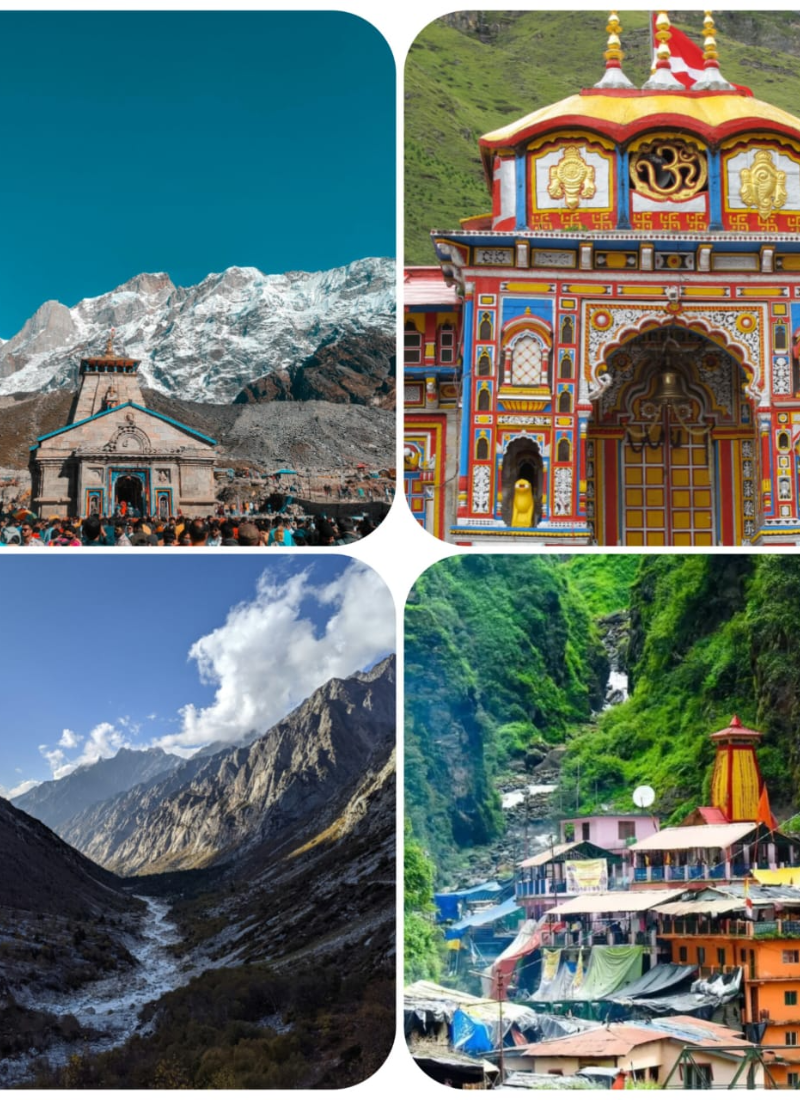
Chardham Yatra Package from Surat 13-Day Tour
Explore Tours
Book Chardham Yatra from Surat 2026. 12 nights/13 days package with meals, transfers & stays. Best price ₹32,000. Family-friendly itinerary.
Included/Exclude
Tour Amenities
Tour Plan
Planning a Chardham Yatra from Surat is a deeply spiritual decision, especially for devotees traveling from Gujarat to the Himalayan shrines for the first time. Every year, thousands of pilgrims from Surat and nearby regions undertake this sacred journey to seek blessings at the four revered dhams — Yamunotri, Gangotri, Kedarnath, and Badrinath. This pilgrimage is not just a tour; it is a carefully planned spiritual path that demands the right travel route, thoughtful time management, physical readiness, and reliable on-ground assistance. This complete guide serves as a comprehensive planning resource for devotees beginning their Char Dham Yatra from Surat, offering clear insights into travel options, itinerary flow, expected costs, safety considerations, and real-world experiences.
Surat is a city with strong spiritual roots, where pilgrimages are often planned as family journeys rather than solo trips. Traveling from Surat to Char Dham involves long-distance transfers, altitude changes, and multiple trekking routes, making structured planning essential. The Char Dham pilgrimage unfolds gradually, both physically and spiritually. Yamunotri serves as the starting point, known for the origin of the Yamuna River and natural hot springs. Gangotri follows as a serene and spiritually calming destination marking the origin of the holy Ganges. Kedarnath is the most demanding yet spiritually powerful part of the journey, dedicated to Lord Shiva, and holds a special appeal for younger pilgrims from Surat, many of whom actively look for a well-planned Kedarnath tour package that balances the challenge of the trek with proper safety, guidance, and on-ground support. Badrinath is the final Dham that brings a calm and reflective close to the pilgrimage under Lord Vishnu's blessings. It holds a unique place in the Char Dham journey, as it traditionally remains accessible for a short period even after Kedarnath, Yamunotri, and Gangotri begin closing for the season, which is why many devotees intentionally plan their visit during this quieter window through thoughtfully designed Badrinath tour packages. Each dham has its own terrain, climate, and spiritual rhythm, which is why proper sequencing matters.
Our Chardham Yatra plan from Surat is designed to maintain a comfortable travel pace for long-distance travelers, allow proper acclimatization in the Himalayas, support families and senior citizens with balanced itineraries, and ensure smooth coordination from Surat to Uttarakhand and back. Many travelers from Gujarat prefer reviewing multiple Char Dham travel formats before finalizing, especially when planning with elders or children.
The starting cost for the Chardham Yatra from Surat is approximately ₹32,000 per person. This price reflects a well-balanced package that prioritizes comfort, safety, and spiritual fulfillment without unnecessary luxury add-ons that increase costs. The base price includes all essential services required for a successful pilgrimage: coordinated transportation from Surat to Haridwar/Dehradun and onward road travel, clean and comfortable accommodation at all halt points, daily breakfast and dinner (pure vegetarian), guided support for temple visits and local sightseeing, and a dedicated on-ground support team available throughout the journey.
What makes this pricing particularly value-driven is the inclusion of long-distance coordination from Surat itself. Many Chardham packages originate from Haridwar or Dehradun, leaving Surat travelers to manage their own travel to the Himalayan foothills. This package eliminates that hassle by providing seamless connectivity from Surat, ensuring that devotees do not have to worry about booking separate train tickets, finding connecting transport, or coordinating with multiple vendors. The price also accounts for the challenging Himalayan terrain, where logistics costs are inherently higher due to winding roads, altitude constraints, and limited accommodation options.
Cost Breakdown
| Expense Component | Estimated Share | Remarks |
|---|---|---|
| Transportation (Surat to Haridwar/Dehradun & full Chardham route) | ₹12,000 – ₹14,000 | Includes all tolls, parking, driver allowances, and mountain driving expertise |
| Accommodation (12 nights in hotels/guesthouses/camps) | ₹10,000 – ₹12,000 | Varies by season and hotel category; basic but clean options in high-altitude areas |
| Meals (Breakfast & Dinner for 12 days) | ₹5,000 – ₹6,000 | Pure vegetarian; local cuisine with familiar options for Gujarati travelers |
| On-ground support & temple assistance | ₹2,000 – ₹3,000 | Dedicated team, local guides, and coordination |
| Permits, registrations & operational costs | ₹1,500 – ₹2,000 | Chardham Yatra registration, tolls, and administrative fees |
| Total Starting Price | ₹32,000 per person | Excludes personal expenses, optional services, and train/flight tickets |
Final pricing depends on:
-
Hotel category: Standard, deluxe, or premium accommodation options
-
Vehicle type: Car (for 2-4 persons), Tempo Traveller (for 5-12 persons), or Mini Bus (larger groups)
-
Group size: Per-person cost decreases with larger groups due to shared transport
-
Seasonal demand: Peak season (May-June and September-October) may have higher rates
-
Customization: Additional days, special requests, or upgraded meals increase the cost
Traveling from Surat to Uttarakhand is the first major step of the yatra. Travelers generally choose one of the following options based on time, budget, and health conditions.
By Train (Most Popular for Budget-Conscious Travelers):
There are no direct trains from Surat to interior Uttarakhand, but Haridwar and Delhi are well-connected. Surat to Haridwar trains include Bandra Terminus-Haridwar Express (19019) and Valsad-Haridwar Superfast Express (12911 - weekly), with a travel time of approximately 22-27 hours. Surat to Delhi options include Tejas Rajdhani Express (12951) and Goa Sampark Kranti Express (12449). From Delhi to Haridwar/Dehradun, trains like Nanda Devi Express (12401) and DDN Janshatabdi (12055) offer frequent connectivity. This option is ideal for families and senior citizens who prefer overnight journeys and lower costs.
By Flight (Fastest but Higher Cost):
Flights from Surat connect to Dehradun (Jolly Grant Airport) via major hubs like Delhi or Mumbai. Airlines such as IndiGo, Air India, and SpiceJet commonly operate on this sector. The total travel time is around 5-6 hours, including layovers. This option is best for travelers with limited time, those who want to avoid long train journeys, or pilgrims who may have health conditions that make long train travel difficult.
By Road (Once You Arrive in Uttarakhand):
Once you arrive in Haridwar or Dehradun, the road journey for the Char Dham Yatra begins. Mountain driving experience becomes critical from this point onward. All vehicles provided in the package are driven by local drivers who are experienced in Himalayan terrain, narrow roads, and unpredictable weather conditions.
Route Explanation
The Chardham Yatra route from Surat follows a carefully sequenced path that respects both spiritual tradition and practical travel constraints. From Surat, pilgrims first travel to Haridwar (via train or flight), which serves as the gateway to the Chardham circuit. Haridwar is the most preferred railway entry point for the Char Dham Yatra. From Haridwar, the journey proceeds in a clockwise direction: Barkot (base for Yamunotri), then Yamunotri and return to Barkot, followed by Uttarkashi (base for Gangotri), then Gangotri and return to Uttarkashi, then Guptkashi (base for Kedarnath), then Kedarnath trek and return to Guptkashi, then Badrinath, and finally the return journey via Rudraprayag, Rishikesh, and Haridwar back to Delhi and Surat.
This sequencing is not arbitrary. Starting with Yamunotri allows pilgrims to gradually acclimatize to higher altitudes. Gangotri follows as a relatively easier destination. Kedarnath, being the most physically demanding, is placed in the middle when pilgrims have already adjusted to the mountain environment. Badrinath, the most accessible and highest in terms of spiritual significance, serves as the concluding dham, allowing pilgrims to reflect on their journey before descending back to the plains.
Kedarnath Trek (Detailed Explanation)
The Kedarnath trek is the most demanding yet spiritually powerful part of the entire Chardham Yatra. The trek distance is approximately 16-18 kilometers one way from Gaurikund to Kedarnath Temple, situated at an altitude of 3,583 meters (11,755 feet). Under normal conditions, the trek takes 6-8 hours each way, depending on individual pace, weather conditions, and physical fitness.
For pilgrims from Surat, who are typically accustomed to sea-level altitudes and flat terrains, this trek requires special preparation. The trail includes steep ascents, rocky paths, and variable weather ranging from bright sunshine to sudden rain or even snow. However, the pilgrimage infrastructure is well-developed. Pilgrims who are not comfortable trekking can opt for several alternatives at additional cost: pony (horse) services, palki (palanquin) carried by porters, or helicopter services from Phata, Sersi, or Guptkashi. Helicopter services are available but not included in this package and can only be booked through the official Heli Yatra website, subject to weather conditions and availability.
For those who choose to trek, the route passes through beautiful forests, waterfalls, and panoramic Himalayan views. Rest points with tea and snack stalls are available every few kilometers. The trek culminates at the Kedarnath Temple, a majestic stone structure that stands in stark contrast to the surrounding snowy peaks. The spiritual energy at the temple, especially during evening aarti, makes every step of the trek worthwhile. Many younger pilgrims from Surat specifically seek out well-planned Kedarnath tour packages that balance the challenge with proper safety, guidance, and on-ground support.
This Chardham Yatra package from Surat is ideal for:
-
Families from Surat and Gujarat: The itinerary is designed to balance travel time, rest, and temple visits, which is especially important for long-distance travelers from Gujarat traveling with children or elderly members.
-
Senior Citizens (Medically Fit): Senior citizens can undertake the Chardham Yatra provided they are medically fit. Many families from Surat travel with elders and prefer a slower-paced itinerary with proper rest days. Options like pony services and helicopter services for Kedarnath are also available if required.
-
First-Time Pilgrims to the Himalayas: If you have never traveled to high-altitude regions before, this package provides the necessary acclimatization days, experienced drivers, and on-ground support to ensure a safe and comfortable experience.
-
Devotees Seeking a Complete Spiritual Journey: Unlike Do Dham packages that cover only two shrines, this package covers all four dhams, fulfilling the traditional pilgrimage requirement.
-
Travelers Who Value Planning and Support: If you do not want to worry about booking accommodations, arranging transport, registering for the yatra, or dealing with unexpected delays, this package handles everything.
-
Groups from Surat (Friends, Religious Groups, Community Organizations): The package can accommodate groups of up to 12 persons in a single vehicle, making it cost-effective and socially enriching.
Health Preparation:
-
Consult your doctor before the journey, especially for heart or respiratory conditions
-
Carry altitude sickness medication if advised by your physician
-
Get a basic health check-up, particularly for senior citizens and those with pre-existing conditions
-
Start light walking or stair-climbing practice 2-3 weeks before the journey
Packing List:
-
Warm clothing: Thermal inners, fleece jackets, heavy winter jacket, woolen cap, gloves, and muffler (even in summer, temperatures drop significantly at night)
-
Comfortable trekking shoes with good grip (waterproof recommended)
-
Rainwear: Poncho or waterproof jacket (essential even in non-monsoon months)
-
Personal medicines: Carry enough for the entire journey plus 2-3 extra days, along with prescriptions
-
Torch or headlamp with extra batteries
-
Power bank (charging options may be limited in high-altitude areas)
-
Valid government ID (Aadhaar card preferred)
-
Chardham Yatra registration confirmation (handled as part of the tour arrangement)
-
Sunscreen lotion, sunglasses, and lip balm (high altitude UV exposure is intense)
-
Water bottle (preferably insulated)
-
Dry snacks, biscuits, or energy bars for trekking days
-
Small backpack for day trips (leave larger luggage in the vehicle)
Safety Guidelines:
-
Follow local instructions and weather advisories strictly
-
Do not overexert yourself; take breaks during the Kedarnath trek
-
Stay hydrated but avoid drinking untreated water (only packaged or boiled water)
-
Inform your tour coordinator immediately if you feel unwell
-
Keep emergency contact numbers saved on your phone and written on paper
-
Respect local customs, temple timings, and dress codes
Booking Guidance:
-
Advance booking is highly recommended due to limited accommodation availability during peak months (May-June and September-October)
-
Early booking also ensures better hotel categories and vehicle options
-
For bookings, call +91 9368679124, email info.travelophila@gmail.com, or fill out the inquiry form on the website
-
Keep buffer days (at least 2-3 days) while booking return tickets from Delhi to Surat in case of weather-related delays
COMPLETE DAY-WISE ITINERARY WITH SPIRITUAL HIGHLIGHTS
Day 1: Surat to Delhi/Dehradun – Haridwar
Your spiritual journey begins from Surat. Depending on your preference, you will travel by train or flight from Surat to Delhi or Dehradun. Upon arrival, you will be greeted by the Travelophila representative and transferred to Haridwar. Evening arrival in Haridwar allows you to experience the world-famous Ganga Aarti at Har Ki Pauri. The sight of hundreds of diyas floating on the holy Ganges, accompanied by chanting of mantras and ringing of bells, sets the perfect spiritual tone for the days ahead. Overnight stay in Haridwar. (Meals: Dinner)
Day 2: Haridwar to Barkot (via Mussoorie)
After breakfast, depart for Barkot, a peaceful town situated on the banks of the Yamuna River. En route, you will pass through the scenic hill station of Mussoorie, often called the “Queen of Hills.” Enjoy breathtaking views of the Doon Valley and snow-capped Himalayan peaks. The drive takes approximately 8-9 hours. Barkot serves as the base camp for Yamunotri. Upon arrival, check into your hotel, rest, and acclimatize. Overnight stay in Barkot. (Meals: Breakfast & Dinner)
Day 3: Barkot to Yamunotri and Return (Trek Day)
This is an early morning start. Drive from Barkot to Janki Chatti or Phool Chatti (approximately 1.5-2 hours), the starting point of the Yamunotri trek. From here, you can either trek 6 kilometers to Yamunotri Temple or opt for a pony/palki at additional cost. The trek offers stunning views of forested paths and mountain streams. At Yamunotri, take a holy dip in the natural hot springs (Surya Kund) and proceed to the temple to offer prayers to Goddess Yamuna. The temple, built by Maharaja Pratap Shah of Tehri, is a simple but powerful structure. After darshan, trek back to Janki Chatti and drive to Barkot. Overnight stay in Barkot. (Meals: Breakfast & Dinner)
Day 4: Barkot to Uttarkashi
After breakfast, drive to Uttarkashi, a town that draws its name from Kashi (Varanasi) due to its spiritual significance on the Ganges. The drive takes approximately 5-6 hours along the Bhagirathi River. Upon arrival, check into your hotel. In the evening, visit the Kashi Vishwanath Temple, one of the most revered Shiva temples in North India. The temple’s architecture and the spiritual atmosphere make it a serene experience. Overnight stay in Uttarkashi. (Meals: Breakfast & Dinner)
Day 5: Uttarkashi to Gangotri and Return
Early morning departure for Gangotri (approximately 4-5 hours one way). The drive along the Bhagirathi River is spectacular, with towering mountains on both sides. At Gangotri, take a holy dip in the Bhagirathi River (extremely cold, but considered purifying) and offer prayers at the Gangotri Temple, dedicated to Goddess Ganga. The temple, built in the 18th century, stands at an altitude of 3,100 meters. According to legend, this is where the Ganges descended to Earth when King Bhagirath prayed to Lord Shiva. After darshan, drive back to Uttarkashi. Overnight stay in Uttarkashi. (Meals: Breakfast & Dinner)
Day 6: Uttarkashi to Guptkashi
After breakfast, drive to Guptkashi, which serves as the base camp for the Kedarnath Yatra. The drive takes approximately 7-8 hours through beautiful valleys and along the Mandakini River. Guptkashi is named after the “hidden Kashi” and is home to the ancient Vishwanath Temple and Ardh Narishwar Temple. In the evening, you can explore the local market or rest in preparation for the challenging Kedarnath trek tomorrow. Overnight stay in Guptkashi. (Meals: Breakfast & Dinner)
Day 7: Guptkashi to Kedarnath (Trek Day – The Most Demanding Day)
This is the most significant day of the entire yatra. Early morning drive from Guptkashi to Gaurikund (approximately 1.5 hours), the starting point of the Kedarnath trek. From Gaurikund, begin the 16-18 kilometer trek to Kedarnath. The trail passes through beautiful forests, waterfalls, and mountain vistas. Alternatively, you can opt for pony, palki, or helicopter services at additional cost. Upon reaching Kedarnath, check into your accommodation (basic due to high altitude) and freshen up. Visit the Kedarnath Temple, one of the 12 Jyotirlingas of Lord Shiva. The temple’s massive stone structure, standing in stark contrast to the surrounding snow-capped peaks, is awe-inspiring. Attend the evening aarti for an unforgettable spiritual experience. Overnight stay in Kedarnath. (Meals: Breakfast & Dinner – packed meals may be provided for the trek)
Day 8: Kedarnath to Guptkashi
Early morning, visit the Kedarnath Temple again for the morning aarti and darshan, which is considered highly auspicious. After breakfast, begin the trek back down to Gaurikund. The descent is easier but still requires caution, especially on rocky sections. From Gaurikund, drive back to Guptkashi. Rest and relax after the physically demanding trek. Overnight stay in Guptkashi. (Meals: Breakfast & Dinner)
Day 9: Guptkashi to Badrinath
After breakfast, drive to Badrinath, the final dham of the pilgrimage. The drive takes approximately 6-7 hours via Joshimath. En route, you will see the confluence of the Alaknanda and Mandakini rivers at Rudraprayag, the confluence of Alaknanda and Pindar at Karnaprayag, and the confluence of Alaknanda and Nandakini at Nandaprayag. Upon arrival in Badrinath, check into your hotel. In the evening, visit the Badrinath Temple for darshan of Lord Vishnu in the form of Lord Badrinarayan. The temple, with its colorful facade and towering flag, is one of the most important Vishnu temples in India. Overnight stay in Badrinath. (Meals: Breakfast & Dinner)
Day 10: Badrinath to Rudraprayag (via Joshimath)
Early morning, you have the option to visit Mana Village, the last Indian village before the Tibet border, located just 3 kilometers from Badrinath. Key attractions in Mana include Vyas Gufa (cave where sage Vyasa is believed to have composed the Mahabharata), Ganesh Gufa, and the Saraswati River emerging from a glacier. After breakfast, drive to Rudraprayag via Joshimath. Joshimath is home to the Narasimha Temple, where the arm of Lord Narasimha is believed to be growing. Upon arrival in Rudraprayag, check into your hotel and rest. Overnight stay in Rudraprayag. (Meals: Breakfast & Dinner)
Day 11: Rudraprayag to Haridwar (via Rishikesh)
After breakfast, drive to Haridwar via Rishikesh. In Rishikesh, the “Yoga Capital of the World,” you can visit the iconic Laxman Jhula, Ram Jhula, and the Triveni Ghat. You may also see the ashrams and temples that line the Ganges. Continue to Haridwar. Upon arrival, check into your hotel. The evening is free for last-minute shopping or a final visit to Har Ki Pauri for the Ganga Aarti. Overnight stay in Haridwar. (Meals: Breakfast & Dinner)
Day 12: Haridwar to Delhi
After breakfast, drive from Haridwar to Delhi (approximately 6-7 hours). Upon arrival in Delhi, you will be dropped at the railway station or airport as per your onward journey schedule. Overnight journey from Delhi to Surat by train or flight. (Meals: Breakfast only – dinner on your own or onboard)
Day 13: Delhi to Surat
Arrive back in Surat with the blessings of the four dhams. The spiritual journey concludes, but the divine memories remain forever.
STAY DETAILS – ACCOMMODATION THROUGHOUT THE YATRA
Accommodation Philosophy:
The Chardham Yatra package from Surat prioritizes clean, comfortable, and safe accommodation at all halt points. However, pilgrims must understand that the Himalayan region, especially in high-altitude areas, has limitations compared to city hotels. The focus is on hygiene, safety, and restful sleep rather than luxury.
Night-by-Night Stay Breakdown:
| Night | Location | Accommodation Type | Expected Amenities |
|---|---|---|---|
| Night 1 | Haridwar | Standard Hotel (2-3 star equivalent) | Attached bathroom, hot water (limited hours), geyser, clean bedding, restaurant, room heater (on request, may have extra cost) |
| Night 2 | Barkot | Guesthouse or Camp | Attached bathroom, hot water (bucket or limited geyser), basic furniture, clean linen, power backup |
| Night 3 | Barkot | Guesthouse or Camp | Same as Night 2 |
| Night 4 | Uttarkashi | Standard Hotel | Attached bathroom, hot water (limited hours), clean bedding, restaurant |
| Night 5 | Uttarkashi | Standard Hotel | Same as Night 4 |
| Night 6 | Guptkashi | Standard Hotel | Attached bathroom, hot water (limited hours), clean bedding, restaurant, room heater (on request) |
| Night 7 | Kedarnath | Basic Guesthouse or Dormitory | Common bathroom (may be shared), limited hot water (bucket system), basic bedding, no room heater (not available at this altitude), simple vegetarian food |
| Night 8 | Guptkashi | Standard Hotel | Same as Night 6 |
| Night 9 | Badrinath | Standard Hotel | Attached bathroom, hot water (limited hours), clean bedding, restaurant, room heater (on request) |
| Night 10 | Rudraprayag | Standard Hotel | Attached bathroom, hot water, clean bedding, restaurant |
| Night 11 | Haridwar | Standard Hotel (2-3 star equivalent) | Attached bathroom, hot water, geyser, clean bedding, restaurant |
| Night 12 | Delhi | Not Applicable (overnight travel to Surat) | N/A |
Important Notes on Accommodation:
-
In Kedarnath, accommodation is basic due to location constraints (altitude of 3,583 meters). Safety and hygiene are always prioritized, but do not expect hotel-like amenities. Rooms may have common bathrooms, limited electricity, and no running hot water (bucket hot water provided at specific times).
-
In Barkot and Uttarkashi, hot water is typically available in buckets or limited geyser hours due to high altitude and cold temperatures.
-
All accommodations are pre-vetted by Travelophila for cleanliness, safety, and cooperation with pilgrims.
-
Upgrades to deluxe or premium hotels are available at additional cost, subject to availability (especially in Haridwar, Guptkashi, and Badrinath).
-
For families or groups, triple-sharing rooms or interconnecting rooms can be requested but not guaranteed.
TRAVEL FLOW & VEHICLE INFORMATION
Surat (Start)
↓ (Train/Flight – not included in package)
Delhi / Dehradun
↓ (Private vehicle – included)
Haridwar (Day 1)
↓ (Private vehicle)
Barkot (Day 2)
↓ (Private vehicle + trek)
Yamunotri (Day 3)
↓ (Trek + private vehicle)
Uttarkashi (Day 4)
↓ (Private vehicle)
Gangotri (Day 5)
↓ (Private vehicle)
Guptkashi (Day 6)
↓ (Private vehicle + trek)
Kedarnath (Day 7 & 8)
↓ (Trek + private vehicle)
Badrinath (Day 9)
↓ (Private vehicle)
Rudraprayag (Day 10)
↓ (Private vehicle)
Haridwar (Day 11)
↓ (Private vehicle)
Delhi (Day 12)
↓ (Train/Flight – not included in package)
Surat (Day 13 – End)
Vehicle Information:
| Group Size | Vehicle Type | Features |
|---|---|---|
| 2-4 persons | Toyota Innova / Similar SUV | Air-conditioned (operational only in plains; turned off in mountains for engine power), comfortable seating, luggage space, experienced Himalayan driver |
| 5-9 persons | Tempo Traveller (12-15 seater) | Air-conditioned, push-back seats, ample luggage space, curtains for privacy, experienced driver with mountain expertise |
| 10-12 persons | Tempo Traveller or Mini Bus | Same as above, with additional luggage carrier |
Driver Expertise:
All drivers provided by Travelophila are local to the Uttarakhand region or have a minimum of 10 years of experience driving in the Himalayas. They are trained in mountain road safety, understand the weather patterns, know the best halting points, and are familiar with emergency protocols. They also assist with basic on-ground coordination when the tour guide is not available.
Vehicle Usage During the Yatra:
-
The same vehicle remains with the group for the entire Chardham circuit (from Haridwar to Haridwar/Delhi).
-
The vehicle does not go on the trek routes (Yamunotri trek from Janki Chatti and Kedarnath trek from Gaurikund). The vehicle waits at the parking area or returns to the hotel/base.
-
For point-to-point drives (e.g., Barkot to Yamunotri base, Uttarkashi to Gangotri), the same vehicle is used.
-
Daily driving distances range from 70 km to 200 km, with driving times of 4 to 9 hours depending on road conditions and altitude.
MEAL PLAN & DINING EXPERIENCE
Included Meals:
-
Breakfast (daily)
-
Dinner (daily)
-
Lunch is not included to allow travelers flexibility during long travel days
Breakfast Menu (Typical Day):
Breakfast is served at the hotel or guesthouse before departure. The menu is pure vegetarian and designed to provide energy for the day ahead.
| Day | Breakfast Options |
|---|---|
| Most Days | Aloo Paratha, Pyaz Paratha, Mix Paratha (with butter/curd), Poha, Sabudana Khichdi, Upma, Toast with Jam/Butter, Tea (Ginger/Masala/Plain), Coffee, Milk |
| Optional (on request) | Corn Flakes with milk, Oatmeal, Boiled Eggs (in limited locations – not guaranteed) |
Dinner Menu (Typical Evening):
Dinner is served at the hotel or guesthouse after returning from temple visits. All meals are pure vegetarian, freshly prepared, and include familiar North Indian options suitable for Gujarati palates.
| Course | Typical Items |
|---|---|
| Main Course (Roti/Rice) | Dal Tadka, Dal Makhani, Chana Masala, Paneer Butter Masala, Mix Vegetable, Aloo Gobhi, Bhindi Masala, Vegetable Kofta |
| Breads | Tawa Roti, Phulka, Butter Naan (on request, may have extra cost), Poori (occasionally) |
| Rice | Steamed Rice, Jeera Rice, Vegetable Pulao (occasionally) |
| Accompaniments | Salad (onion, cucumber, tomato), Pickle (mixed or mango), Green Chutney, Curd/Raita |
| Dessert (occasional) | Kheer, Halwa, or Fruit (seasonal) |
Special Dietary Considerations:
-
Jain Food: Available on prior request. No onion, no garlic, no root vegetables.
-
No Onion-No Garlic: Available on prior request.
-
Sugar-Free / Diabetic Friendly: Available on prior request.
-
Gluten-Free / Lactose-Free: Limited availability; strongly recommended to carry your own supplies.
Water and Beverages:
-
Packaged drinking water is not included but can be purchased at all stops.
-
It is strongly recommended to drink only packaged or boiled water to avoid stomach issues.
-
Tea and coffee are included with breakfast. Additional beverages (cold drinks, packaged juices) are at personal cost.
Lunch Arrangements (Not Included):
Since lunch is not included, travelers have the flexibility to stop at local dhabas (roadside eateries) or restaurants along the route. Most dhabas serve simple, hot, pure vegetarian meals like thali (dal, sabji, roti, rice), parathas, or noodles. Average lunch cost per person: ₹150-₹300. For trekking days (Yamunotri and Kedarnath), it is advisable to carry dry snacks, energy bars, or packed lunch from the hotel.
SPIRITUAL HIGHLIGHTS & TEMPLE INFORMATION
Yamunotri Temple – The Beginning of the Journey
-
Deity: Goddess Yamuna (sister of Lord Yama, the God of Death)
-
Altitude: 3,293 meters
-
Temple Timing: 6:00 AM to 8:00 PM (winter closing earlier)
-
Spiritual Significance: A dip in the Yamuna River is believed to protect from untimely death. The hot springs at Surya Kund (190°F) are used to cook rice and potatoes as offerings (prasad).
-
Architecture: Simple stone structure built by Maharaja Pratap Shah of Tehri.
-
Rituals to Perform: Holy dip in Surya Kund or Yamuna River, offering of cooked rice prasad at the temple, darshan of the black marble idol of Goddess Yamuna.
-
Nearby Attractions: Divya Shila (rock pillar worshiped before entering the temple), Surya Kund (hot water spring), Gauri Kund (another hot spring, believed to be where Goddess Parvati bathed).
Gangotri Temple – The Origin of the Holy Ganges
-
Deity: Goddess Ganga
-
Altitude: 3,100 meters
-
Temple Timing: 6:30 AM to 2:00 PM and 3:00 PM to 9:00 PM
-
Spiritual Significance: According to legend, King Bhagirath prayed to Lord Shiva here to bring the Ganges to Earth. Lord Shiva released the Ganges from his matted hair at this location.
-
Architecture: White stone temple built in the 18th century by Gorkha general Amar Singh Thapa.
-
Rituals to Perform: Holy dip in the Bhagirathi River (extremely cold – do not stay in for more than a few seconds), offering of flowers and coins at the temple, attending the evening aarti.
-
Nearby Attractions: Submerged Shivling (a natural rock where Lord Shiva is believed to have sat), Bhagirath Shila (where King Bhagirath meditated), Gauri Gufa (cave of Goddess Parvati), Kedar Ganga Sangam (confluence of Kedar Ganga and Bhagirathi rivers).
Kedarnath Temple – The Most Demanding & Powerful
-
Deity: Lord Shiva (in the form of a triangular Jyotirlinga)
-
Altitude: 3,583 meters
-
Temple Timing: 4:00 AM to 9:00 PM (subject to weather)
-
Spiritual Significance: One of the 12 Jyotirlingas of Lord Shiva. According to legend, after the Kurukshetra war, the Pandavas sought Lord Shiva’s forgiveness. Lord Shiva eluded them and took refuge at Kedarnath in the form of a bull. When pursued, he dived into the ground, leaving his hump on the surface.
-
Architecture: Massive stone structure built by Adi Shankaracharya in the 8th century. The temple has survived centuries of harsh weather and is made entirely of large, interlocked stone slabs.
-
Rituals to Perform: Panchamrit abhishekam (bathing the lingam with milk, curd, honey, sugar, and ghee), Rudra abhishekam, offering of bilva leaves, attending the evening aarti (highly recommended – very emotional and powerful).
-
Nearby Attractions: Bhairavnath Temple (1 km from Kedarnath – must visit before leaving as it is believed that Bhairavnath guards the temple in winter), Gandhi Sarovar (2 km trek), Chorabari Tal (Gandhi Sarovar), Shankaracharya Samadhi (behind the temple).
Badrinath Temple – The Final Dham
-
Deity: Lord Vishnu (as Lord Badrinarayan)
-
Altitude: 3,133 meters
-
Temple Timing: 4:30 AM to 1:00 PM and 4:00 PM to 9:00 PM
-
Spiritual Significance: One of the 108 Divya Desams (holy shrines of Vishnu) and one of the four Char Dhams. According to legend, Lord Vishnu meditated here under a badri tree (jujube tree). Goddess Lakshmi protected him from the elements by turning into a badri tree, hence the name Badrinath.
-
Architecture: Colorful temple with a conical roof and a small golden dome. The facade is painted in bright colors. The temple was rebuilt multiple times and currently stands as a 19th-century structure.
-
Rituals to Perform: Abhishekam to the idol of Lord Badrinarayan (made of black stone – Shaligram), offering of tulsi leaves, attending the morning and evening aarti, taking a dip in the Tapt Kund (hot water spring) before entering the temple.
-
Nearby Attractions: Tapt Kund (hot sulfur spring), Narad Kund (where Sage Narad performed penance), Mana Village (last Indian village before Tibet – 3 km), Vyas Gufa (cave where Mahabharata was written), Ganesh Gufa, Bhim Pul (natural stone bridge), Saraswati River (emerging from a glacier), Charanpaduka (rock with footprints of Lord Vishnu).
QUESTIONS & ANSWERS
Q: Is there a direct train from Surat to Chardham?
A: No, there is no direct train to the Chardham temples. Pilgrims from Surat usually travel first to Haridwar or Delhi by train, and then continue the journey to Uttarakhand by road. Haridwar is the most preferred railway entry point for the Char Dham Yatra.
Q: What is the best time for Chardham Yatra from Surat?
A: The best time is from May to June and September to mid-October. These months offer relatively stable weather and safer road conditions. July and August are generally avoided due to monsoon-related risks.
Q: Can senior citizens from Surat comfortably do the Chardham Yatra?
A: Yes, senior citizens can undertake the Chardham Yatra, provided they are medically fit. Many families from Surat travel with elders and prefer a slower-paced itinerary with proper rest days. Options like pony services and helicopter services for Kedarnath are also available if required.
Q: Is this Chardham Yatra package suitable for families?
A: Yes, this package is suitable for families traveling from Surat, including children and elderly members. The itinerary is designed to balance travel time, rest, and temple visits, which is especially important for long-distance travelers from Gujarat.
Q: What type of accommodation is provided during the Yatra?
A: Accommodation includes clean, comfortable guesthouses or hotels on the Chardham Route. In high-altitude areas like Kedarnath, accommodation may be basic due to location constraints, but safety and hygiene are always prioritized.
Q: Are meals included in the Chardham Yatra package?
A: Yes, the package includes daily breakfast and dinner, usually vegetarian and prepared according to local availability. Lunch is not included, allowing travelers flexibility during long travel days.
Q: How difficult is the Kedarnath trek for Surat travelers?
A: The Kedarnath trek is around 16-18 km one way and can take 6-8 hours, depending on pace and weather. Pilgrims from Surat who are not comfortable trekking can opt for pony, palki, or helicopter services at an additional cost.
Q: Is helicopter service available for Kedarnath from this package?
A: Helicopter services for Kedarnath are available but not included in this package. These can only be booked via the Heli Yatra website, subject to weather conditions and availability.
Q: What medical facilities are available during the Chardham Yatra?
A: Basic medical facilities and government health centers are available along the Chardham route. However, travelers from Surat are advised to carry personal medicines, prescriptions, and consult a doctor before starting the journey.
Q: Is travel insurance necessary for Chardham Yatra?
A: Travel insurance is not mandatory, but it is strongly recommended, especially for travelers coming from long distances like Surat. Insurance helps cover medical emergencies, trip delays, or unforeseen disruptions.
Q: What documents are required for the Chardham Yatra?
A: You need a valid government ID (Aadhaar card preferred). Chardham Yatra Registration is mandatory and is usually handled as part of the tour arrangement.
Q: Is the Chardham Yatra safe during the monsoon season?
A: Monsoon months (July-August) can be risky due to landslides and roadblocks. Travelers from Surat are advised to avoid these months unless they are flexible with travel delays.
Q: How is mobile network connectivity during the Yatra?
A: Mobile network coverage is available in most towns, but connectivity may be weak or unavailable in high-altitude areas like Kedarnath. It is advisable to inform family members in advance about potential connectivity gaps.
Q: Can the Chardham Yatra itinerary be customized for Surat travelers?
A: Yes, the itinerary can be customized based on travel dates, hotel preferences, vehicle type, or family requirements. Customization is especially useful for Surat-based groups traveling with elders.
Q: What should I pack for Chardham Yatra from Surat?
A: Travelers should pack: warm clothing (even in summer), comfortable trekking shoes, rainwear, personal medicines, torch, power bank, and ID documents.
Q: Are there any age restrictions for the Chardham Yatra?
A: There is no official age restriction, but physical fitness is important. Parents traveling with young children or elderly members should plan the journey carefully.
Q: Are there any hidden charges in the Chardham Yatra package?
A: No, there are no hidden charges. However, optional services like helicopter rides, pony services, or personal expenses are not included.
Q: What happens if bad weather delays the itinerary?
A: Weather conditions in the Himalayas can change quickly. In case of delays, the tour team assists with alternate arrangements. Travelers from Surat should keep buffer days in mind while booking return tickets.
Q: Can I visit all four dhams in fewer days?
A: While faster itineraries exist, completing all four dhams comfortably from Surat typically requires 12-13 days. Shorter plans may cause exhaustion, especially for first-time pilgrims.
Q: Is Do Dham Yatra a better option for some Surat travelers?
A: Yes, for travelers from Surat who are short on time or traveling with elderly family members, a Do Dham Yatra package can be a more practical and comfortable choice. It usually covers two major dhams, most commonly Kedarnath and Badrinath, and requires fewer travel days while still offering a deeply meaningful pilgrimage experience.
Q: How do I book the Chardham Yatra package from Surat?
A: You can book by calling +91 9368679124, emailing info.travelophila@gmail.com, or filling out the inquiry form on the website. Early booking is recommended for peak season.
FAQs
1. What is the total duration of this Chardham Yatra package from Surat?
The total duration is 12 nights and 13 days, starting from Surat and returning to Surat.
2. What is the starting cost of the Chardham Yatra from Surat?
The starting cost is approximately ₹32,000 per person. Final pricing depends on hotel category, vehicle type, group size, and seasonal demand.
3. When do the Chardham temples open in 2026?
Tentative opening dates: Yamunotri & Gangotri on 19 April 2026, Kedarnath on 22 April 2026, and Badrinath on 26 April 2026. Dates may vary slightly based on temple committees and weather conditions.
4. How do I reach Uttarakhand from Surat?
You can travel by train via Haridwar or Delhi (trains like Bandra Terminus-Haridwar Express or Tejas Rajdhani Express), by flight to Dehradun via major hubs, or by road once you arrive in Haridwar or Dehradun.
5. Is the Kedarnath trek mandatory?
The trek is approximately 16-18 km one way. However, alternatives like pony, palki, or helicopter services are available at additional cost.
6. What kind of food is included?
Daily breakfast and dinner are included. Breakfast options include Aloo Paratha, Pyaz Paratha, Mix Paratha, Poha with tea or curd. Dinner includes Dal, Sabji, Roti, Chawal, and pickle. All meals are pure vegetarian.
7. Can I customize this itinerary?
Yes, the itinerary can be customized based on your travel dates, hotel preferences, vehicle type, or family requirements.
8. Is advance booking required?
Yes, advance booking is highly recommended due to limited accommodation availability during peak months (May-June and September-October).